










Looking for help with a Garden Pathway? Here’s some ideas that can help.
Garden pathways do more than guide you from one area to another. When designed well, a garden pathway can enhance the overall look of your garden while improving how the space is used. A thoughtful pathway adds structure, defines movement and creates a more polished, cohesive outdoor environment.
Whether your garden is large or compact, the right pathway design can make a noticeable difference.
Understand the Purpose of Your Garden Pathway
Before choosing materials or layout, consider how your pathway will be used. Some paths are decorative features that add visual interest, while others are essential for connecting areas such as patios, lawns, entrances or seating spaces.
Understanding its purpose will help you decide on the right materials, width and placement, ensuring the pathway works both practically and aesthetically within your garden.
Read more about Garden Design.

Choose Materials That Suit Your Garden Style
The material you choose sets the tone for your pathway and should complement the overall design of your garden.
Natural stone creates a timeless and elegant look, while gravel offers a softer, more informal feel.
Porcelain paving is a popular choice for modern spaces due to its sleek finish and durability.
It is also important to consider how the material performs in different weather conditions, ensuring it remains safe, durable and visually appealing throughout the year.
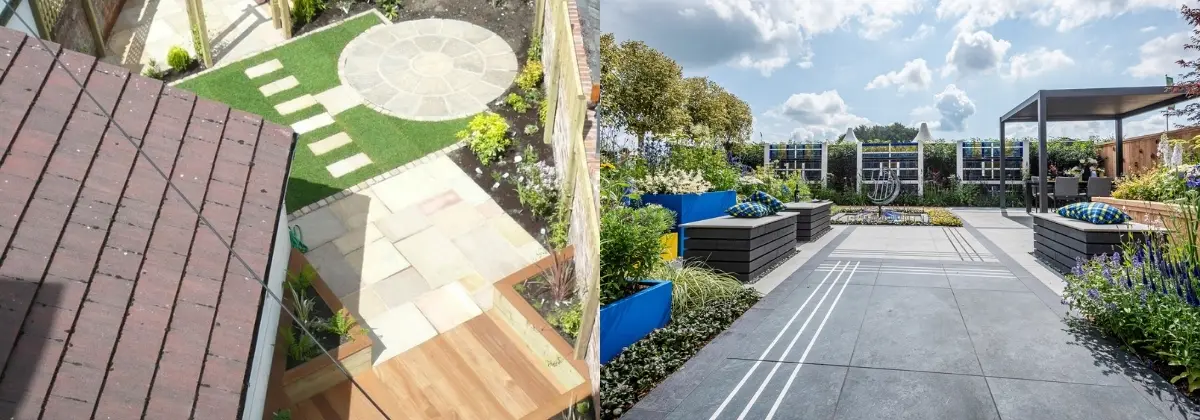
Create a Natural Flowing Garden Pathway
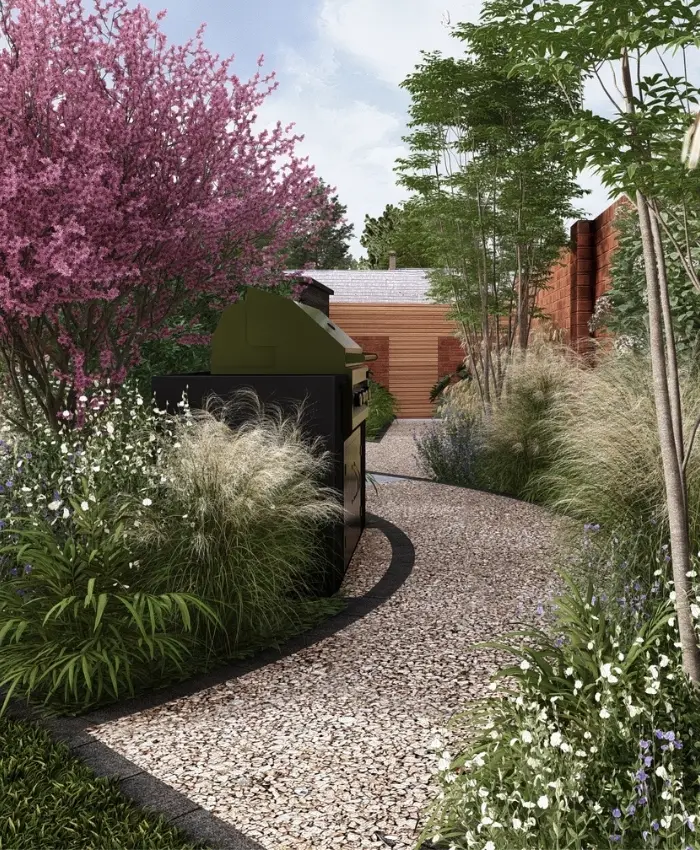
A well-designed pathway should feel intuitive and easy to follow. Instead of rigid straight lines, gentle curves can create a more relaxed and natural movement through the garden.
Curved pathways also allow you to guide visitors through key areas, subtly revealing different parts of the garden and making the space feel larger and more engaging.

Get the Pathway Width Right
The width of your pathway plays a key role in both comfort and usability. Main pathways that connect frequently used areas should be wide enough for easy movement, while secondary paths can be narrower but still accessible.
Allowing enough space ensures the pathway feels comfortable to walk on and avoids the garden feeling cramped or restrictive.
Read more about Garden Design.

Add Structure with Edging
Edging helps define the shape of your pathway and gives it a clean, finished appearance. It also prevents materials from spreading into surrounding areas, keeping the design neat over time.
Materials such as brick, stone or metal edging can be used to complement the pathway surface, adding subtle detail and improving durability.
Use Planting to Soften the Look
Surrounding your pathway with planting helps it blend naturally into the garden. Flowers, low shrubs and ornamental grasses can soften hard edges and introduce colour, texture and seasonal interest.
Well-placed planting also helps guide the eye along the path, creating a more inviting and visually balanced outdoor space.
Read more about Planting Schemes.
Think About Long-Term Maintenance
Different pathway materials come with different maintenance needs. Gravel may require occasional topping up and levelling, while paving may need cleaning to maintain its appearance.
Choosing materials that suit your lifestyle will help keep your garden looking neat and well-maintained without requiring constant effort.
Work with a Professional Landscaping Company for the Best Results
Creating a pathway that balances style and function requires careful planning. A professional landscaper can design a layout that suits your garden, recommend the right materials, and ensure a high-quality finish.
With expert guidance, your pathway will enhance both the look and usability of your space. If you’re ready to upgrade your garden, Actual Landscapes can help bring your vision to life.

Transform Your Outdoor Space with Actual Landscapes
At Actual Landscapes, we specialise in designing stunning, functional outdoor spaces tailored to your needs. Serving North Wales and surrounding areas, including Cheshire, Flintshire, Wirral, Ellesmere Port, Denbighshire, Wrexham, Conwy, Shropshire, and Merseyside, our services include: